Caring for your indoor garden

At Sasha's Terrariums and Jarrariums, we pride ourselves on creating beautiful, self-sustaining indoor gardens. While they are designed to be low maintenance, a little care and understanding will ensure your green companions thrive. Explore our guides below to keep your terrariums and jarrariums healthy and happy.

Frequently asked questions about terrarium care

It all began with a simple idea fueled by a deep passion for indoor gardening. As a small business, Sasha's Terrariums and Jarrariums prides itself on personal attention and dedication to every detail. Our approach is rooted in quality and integrity, ensuring that everything we do reflects our commitment to excellence and the well-being of your plants. Here are some answers to common questions about looking after your unique indoor garden.
Do I need to water them?

Water only a little and only when needed, using a misting spray bottle. Since the water has nowhere to go if there's too much, it's crucial to be sparing. Rainwater is best. You can make a visual judgement: water if the soil is drying out or if any plants or moss are wilting. However, you might find you don't need to water at all for closed systems.

Care of open topped terrariums
Check the soil moisture every two weeks, you can usually see if the soil is getting a little lighter which indicates it’s drying out.  If it is drying out a bit then add just a little rainwater.  Emphasis on little, don’t overwater as the soil will get waterlogged; if that happens you could kill the plants. Cacti and succulents don’t need a lot of water, but they do need some now and again. In addition, if air plants are included, even though you might think an 'air plant' needs no more than air, this is not so and they need water too. The air plants Sasha uses need to be placed green side down in rainwater every 2 weeks for just 10 minutes.  Then gently shake off the water and reposition the plants.


Do they look after themselves?

Mostly, yes! The plants create their own self-sustaining growing environment within the terrarium. They get energy through photosynthesis, converting light, carbon dioxide, and water into sugars and oxygen. While photosynthesis pauses in the dark, the plant continues to breathe, absorbing oxygen and releasing carbon dioxide and water vapour.

Do I need to feed them?

No, generally terrariums and jarrariums are self-sustaining ecosystems and do not require additional feeding. The decomposition of organic matter within the container provides sufficient nutrients for the plants.

Where should I best locate them in my home?

A position with natural light is ideal, but it's crucial to avoid strong, direct bright sunlight. This can cause too much condensation and can scorch the plants. Indirect light is always best.

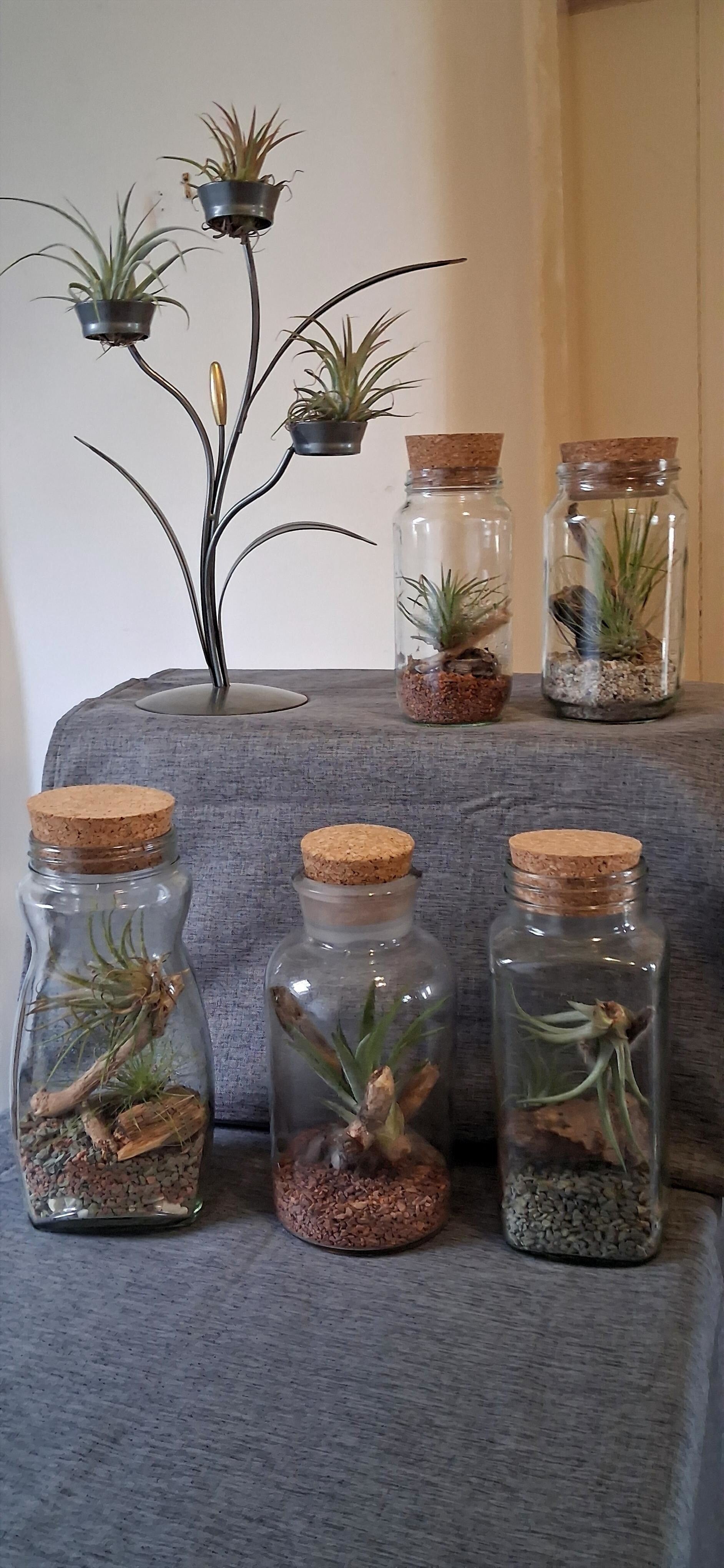
Caring for Air Plants

You might think an 'air plant' needs no more than air, this is not so and they need water too. The air plants Sasha uses need to be placed green side down in rainwater every 2 weeks for just 10 minutes.  Then gently shake off the water and reposition the plants.