Sasha's Blog posts
The anxiety and excitement inherent in new things
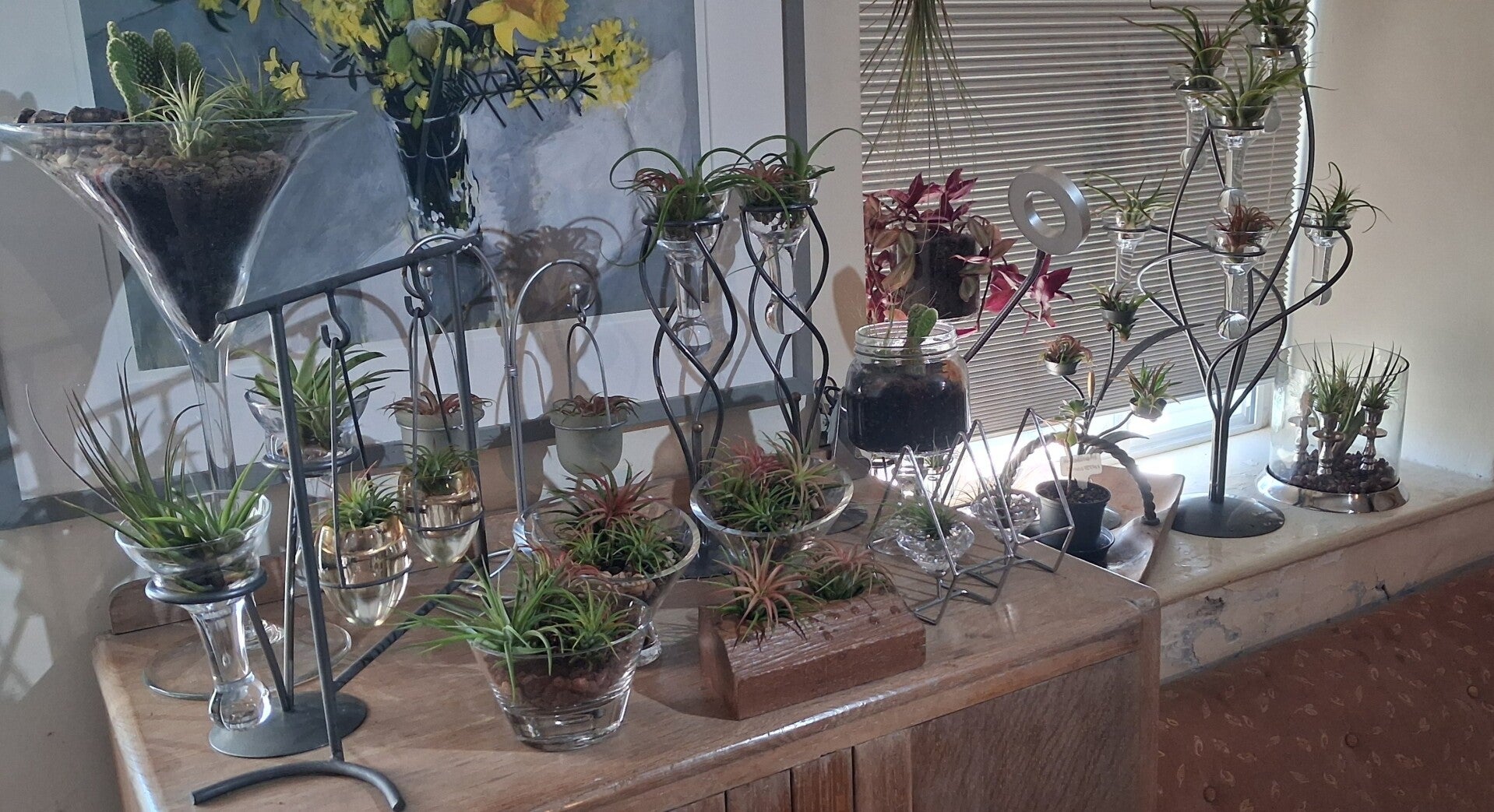
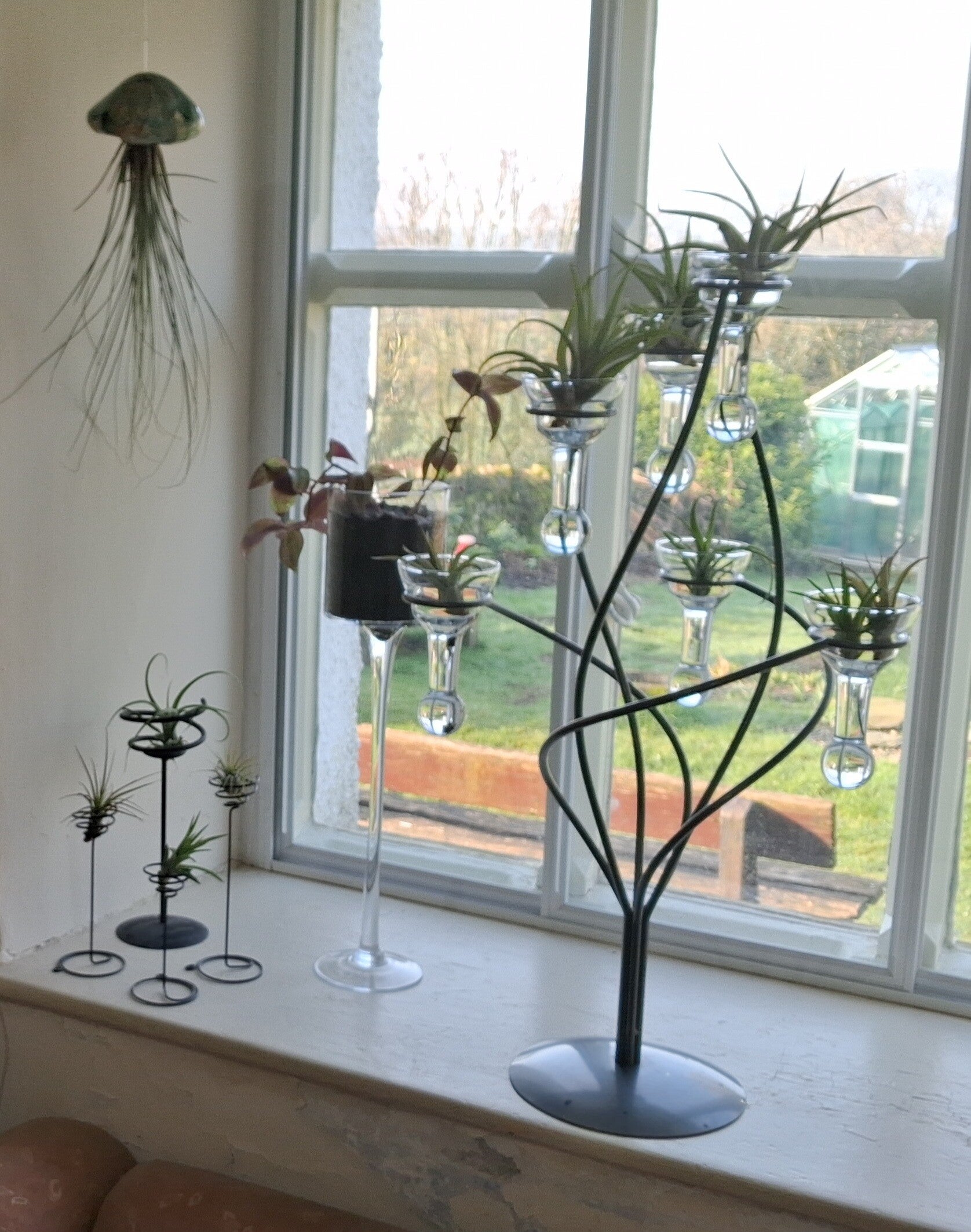
I am experiencing anxiety and excitement in equal quantities this morning. It’s just a few days before we launch Sasha’s Air Plant Range at Cartmel Craft Fair and I am wondering if upcycling glassware, metal and wood as the framework and structure for air plant interior displays is a good idea after all. I have put a lot of time and effort into sourcing materials, curating and creating the displays so all should be well, but suddenly this morning I had a moment of doubt. Maybe customers won’t see what I see, maybe they won’t even notice the range and walk by.
I, Sasha, have always chased after new things, new experiences but the really ‘new’ stuff just happened around me and came to me along with a lot of anxiety and excitement into my life. For example in one area of my life, my first brick sized Motorola phone, then on to Wordperfect, Microsoft and desktop computers, Apple, tablets, laptops, smart phones, email, social media, Apps, more smart, smart everything, a deluge of information sources, clouds then AI, not to mention all the new crimes that the digital age has enabled; I have coped; whilst the world is also warming up because of the energy needed by huge data centres, leading to more anxiety and perhaps excitement and opportunity as the human species figures out a way to fix all that.
I feel better, there is hope.
After all, in the great scheme of things my carefully curated Air Plant Range does not matter, but it’s another ‘new’ to me; one which I found, it didn’t find me, so that makes it much more satisfying. I enjoyed creating it. Now, over to you, my lovely customers, you decide if it was worth it.
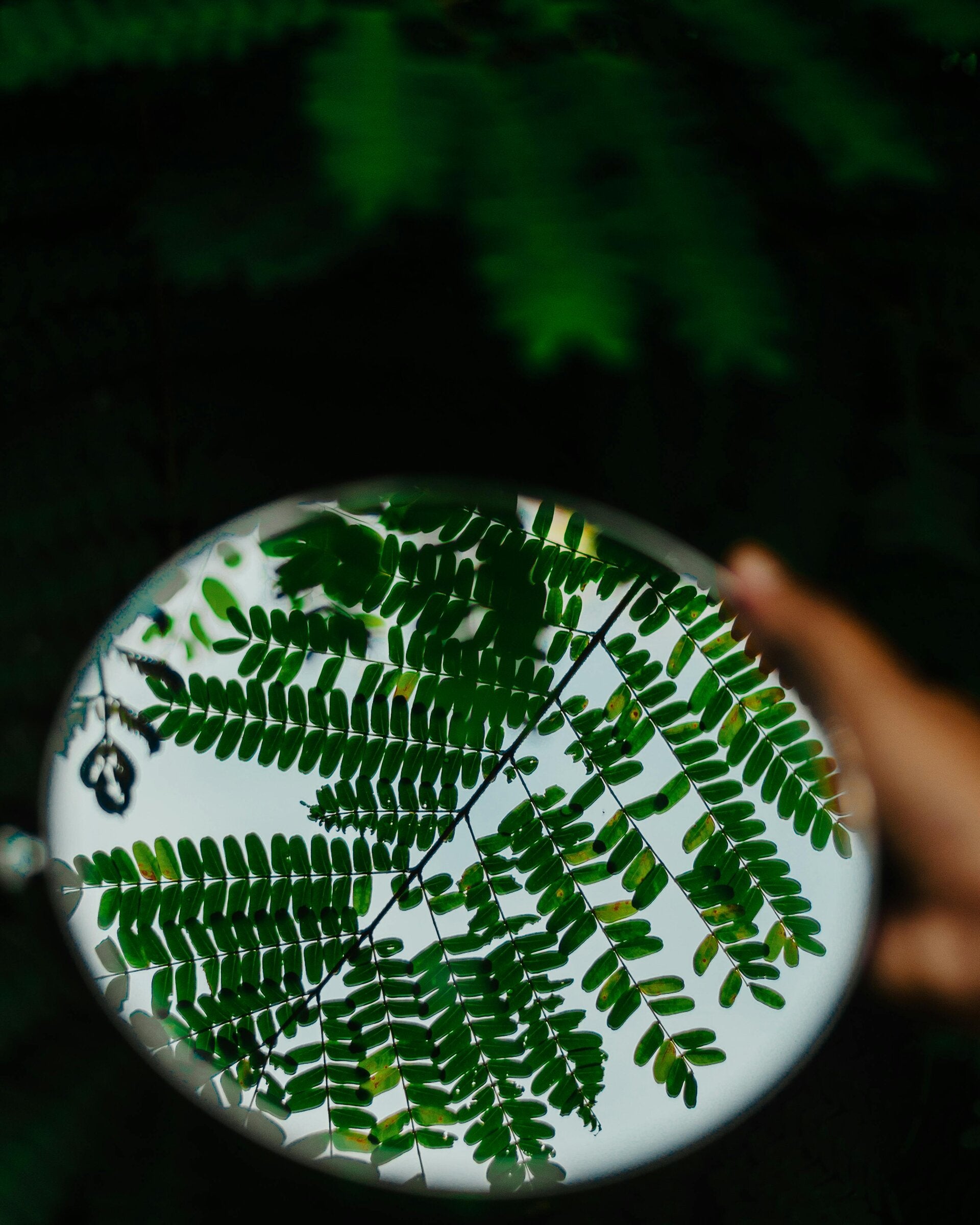
Is it OK that I talk to my plants?
Plant geneticist Author Daniel Chamovitz affirmed that "while plants may not be able to think as humans do, they exhibit many elements of consciousness: they can see, smell, feel, mount a defence, warn their neighbours of danger, and even remember". There's a plan for a lesson about the consciousness of nature on the Global Oneness Project website that explores the idea that "animals, plants, and even fungi are more aware than people previously thought". I have read some of this material on the website and lifted the above points from the text. So what? I do talk to the plants in my creations and I sometimes wonder if they are listening. I am sure they are not but I do it nevertheless because I do believe that I should work hard to make sure my terrariums and jarrariums are set up right and cared for so that the plants can thrive. Talking to them is part of my caring mindset. Recently I have been using air plants in open top creations. They require a different set of care priorities. Check out Sasha's latest creations for more news on using Air Plants.
What is it about Green?
Sasha’s Terrariums and Jarrariums were on display at the Hawes Market Hall Craft Fair over the weekend just past. We took a lot of our latest creations with us, but we didn't bring many back as so many went off to new homes. What a wonderful time we had. We met lots of lovely sellers and buyers and had some great conversations about the inner world of terrariums and jarrariums.
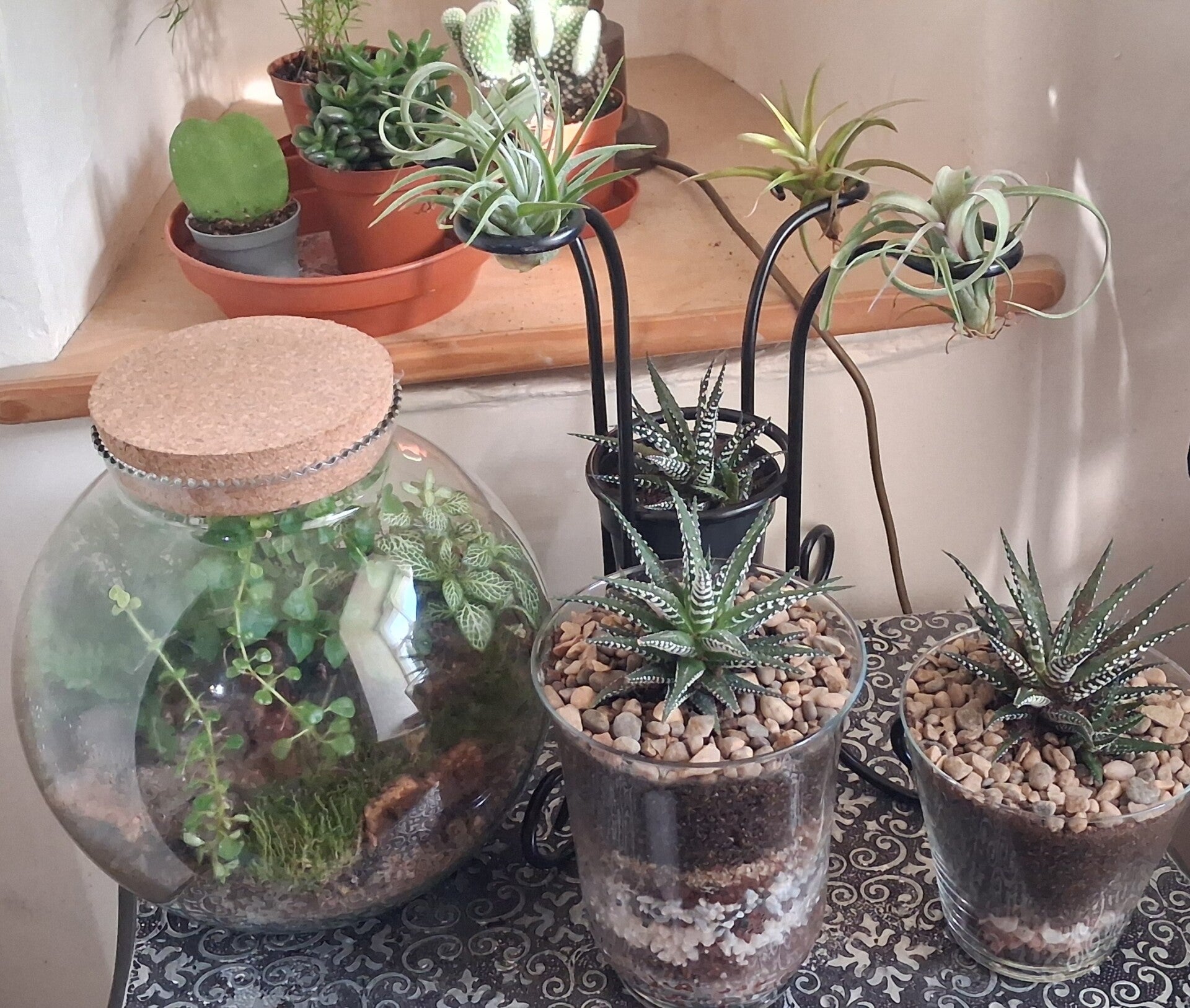
Some of those conversations focused on the colours of the plants inside which got me thinking about why some people go for green with their choice of terrariums and jarrariums and some don’t. This reflection on my part is about Green the colour, not the bigger and broader use of the word as a descriptor of a way of living and taking care of the planet. Some of Sasha’s Terrariums feature plants that are totally Green and some are a mix of strong reds, pinks, purples and whites with powerful ribbed designs on the leaves. Some have lots of ferns, stone, slate, gravel, cork, driftwood and a variety of lovely mosses.
It appears that many of Sasha’s fans like a strong colour inside. Fewer go for Green. Whatever works for you is the right colour palette for you and I make no judgement to suggest one is better than the other. It all depends on what you are looking for. A visual, living addition to your home or something deeper to connect you with nature? I love them all. Creating exclusively with green plants can mean the look inside the glass is more wild and more messy. I like working with green and I like the feeling that green offers when I sit alongside some of my creations.
What is going on here? What is it about Green?
If you Google on the matter the AI bot will tell you that Green is a cool refreshing colour.
That Green is the colour of mother earth, and the goddess Gaia (or Gaea), is the primordial Greek goddess and personification of the Earth and is Mother Nature. If the Gaia persona speaks to you then look her up as the star of the RHS Chelsea Flower Show award-winning On the Edge garden by designer Sarah Eberle, created for the Campaign to Protect Rural England (CPRE). It features a breath taking sculpture of Gaia, worked from a fallen redwood. In this garden Gaia sleeps peacefully amid native wildflowers and yes, lots of Green coloured foliage. I would like to include a photograph of this garden here but I am concerned about breaching copyrights.
More contemporarily Green is described as the colour of living foliage, symbolising renewal, Spring and vitality leading on to a discussion about health and ecology associated with organic living, eco-friendliness, and physical well-being.
To complete the list, we could add wealth and prosperity linking Green to financial success as the colour of some money for those of us who still carry cash. Also, it’s a positive indicator (like a traffic light) meaning it is safe to proceed.
How does Green make me feel?
That’s the bigger philosophical and practical picture dealt with; but for me, Green is simply calming. I feel it when Spring comes with vivid green to be seen and experienced everywhere. That’s why I like Green inside with the wild of Sasha’s Terrariums and Jarrariums. I am sitting next to such a jarrarium as I write this reflection. Just maybe Gaia is sitting alongside me, I hope she is.
Do please let me know if green is good for you.


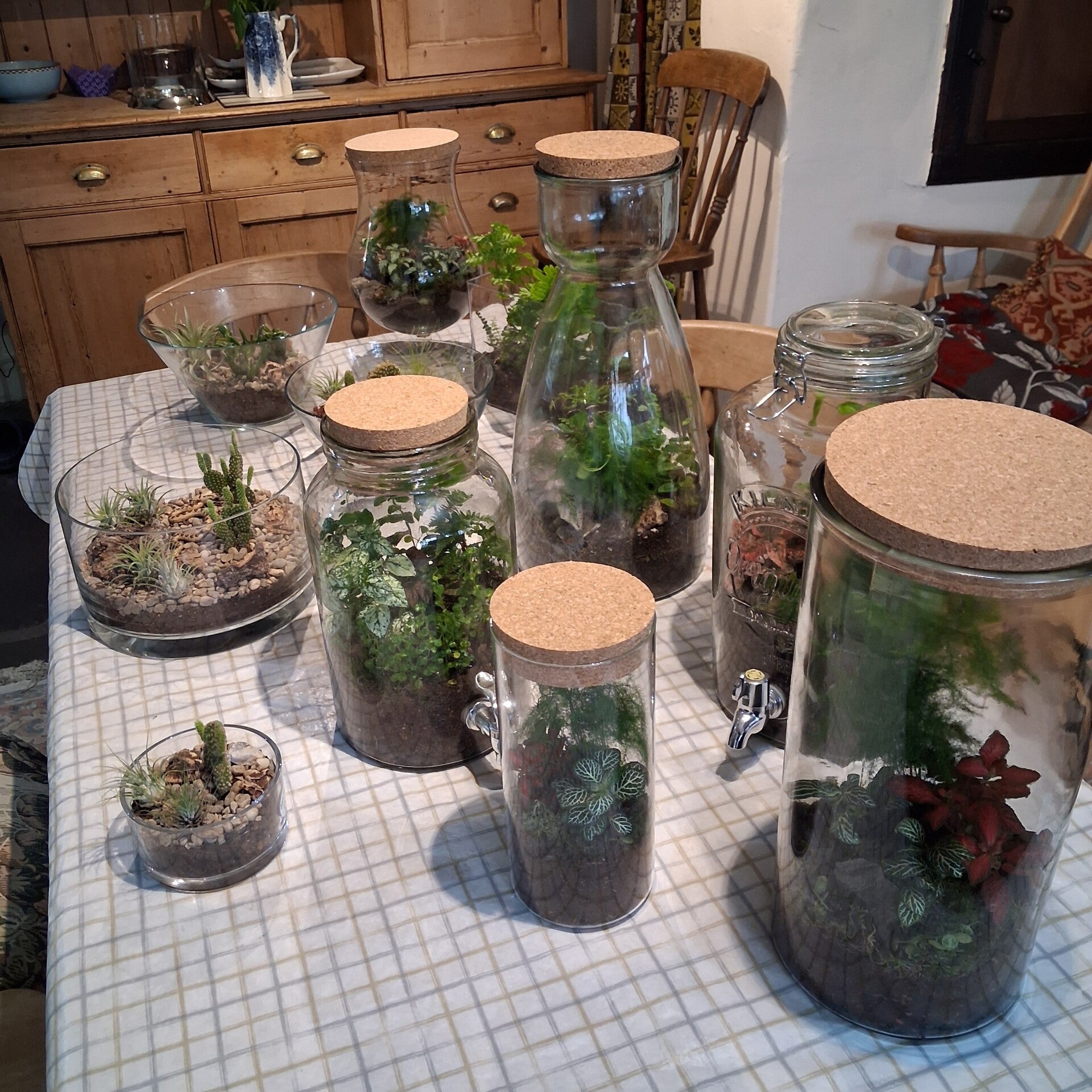
Where did Sasha's Terrariums and Jarrariums come from?
Hi. I'm Sasha, at least that's my name and who I am when I think about and create worlds inside glassware. It can be difficult to write about Sasha in the first person as we have not yet fully blended into one entity. So if I seem to be wandering from one entity to another, please try to run with it as it is and understand my difficulty. I kinda like it as it's nice to have somebody to talk things over with when exploring new ideas.
Four times Sasha tried to retire, leaving his 'proper job' behind , but each time was drawn back into the world of work. He chose jobs that were completely unlike anything he had done before and they were fine for a while; then he lost momentum, patience and interest and retired back to his outdoor garden, which at that point had taken five years to develop into something half presentable and productive.
That could have been enough but it wasn't. Then he saw a chap on TV put a fern into soil in a small jar which was then sealed, put on a shelf indoors, and it thrived. That sparked Sasha's interest in creating small living worlds where plants could thrive and truly bring nature indoors; hence he often says let's 'Go a Little Wild Inside'. Now, Sasha knew about terrariums but not in any detail and certainly had limited understanding of the process and chemistry of self-contained photosynthesis, the process by which green plants, algae, and some bacteria convert sunlight into energy. He hadn't heard of jarrariums - the smaller ones and for a while thought he had invented new word. Not so it turned out as a google search will quickly show. But Sasha soon found that there are lots of jars, vases and drinks dispensers of all shapes and sizes available for reuse and repurposing.
So he got a book or two from the library, somewhat unusual perhaps in the digital age, and learned the basics. Then he learned by doing, and by failure and mistakes and then soon a hobby, because that's what it was at the start, got out of hand and became a business selling Sasha's terrariums and jarrariums. After all, money was required to buy new plants and raw materials in order to feed Sasha's obsession. He is showing no sign of retiring yet.
Is what Sasha does a craft and a hobby?
If you Google the meaning of 'crafter' the AI bot will show you something like this: A crafter is a person who creates decorative or functional objects by hand, typically as a hobby or as part of a small business. The term encompasses anyone skilled in manual arts, such as knitting, woodworking, pottery, or jewellery making. I think Sasha just about makes the cut here and could argue he is a crafter and creative indoor gardener. The terrariums and jarrariums he makes are decorative and perhaps unusual as a craft output in that they are living things.
As for the hobby label, then it was and still is a hobby for Sasha. If the process of crafting these lovely things becomes just a job and then a chore the end will come quite quickly. Hobbies can and do get out of hand.
As Sasha is a former business owner and manager over many decades, it would be dishonest to deny that Sasha's tried and tested sales and business development instincts don't feature and add value to the running of Sasha's Terrariums and Jarrariums, but they are under control. Sasha delights in telling people all about the features and benefits of his creations. Telling is not really selling, asking questions and providing solutions to problems, meeting needs and so on, is selling. Fortunately this blog is not part of a business skills guide so, who cares?
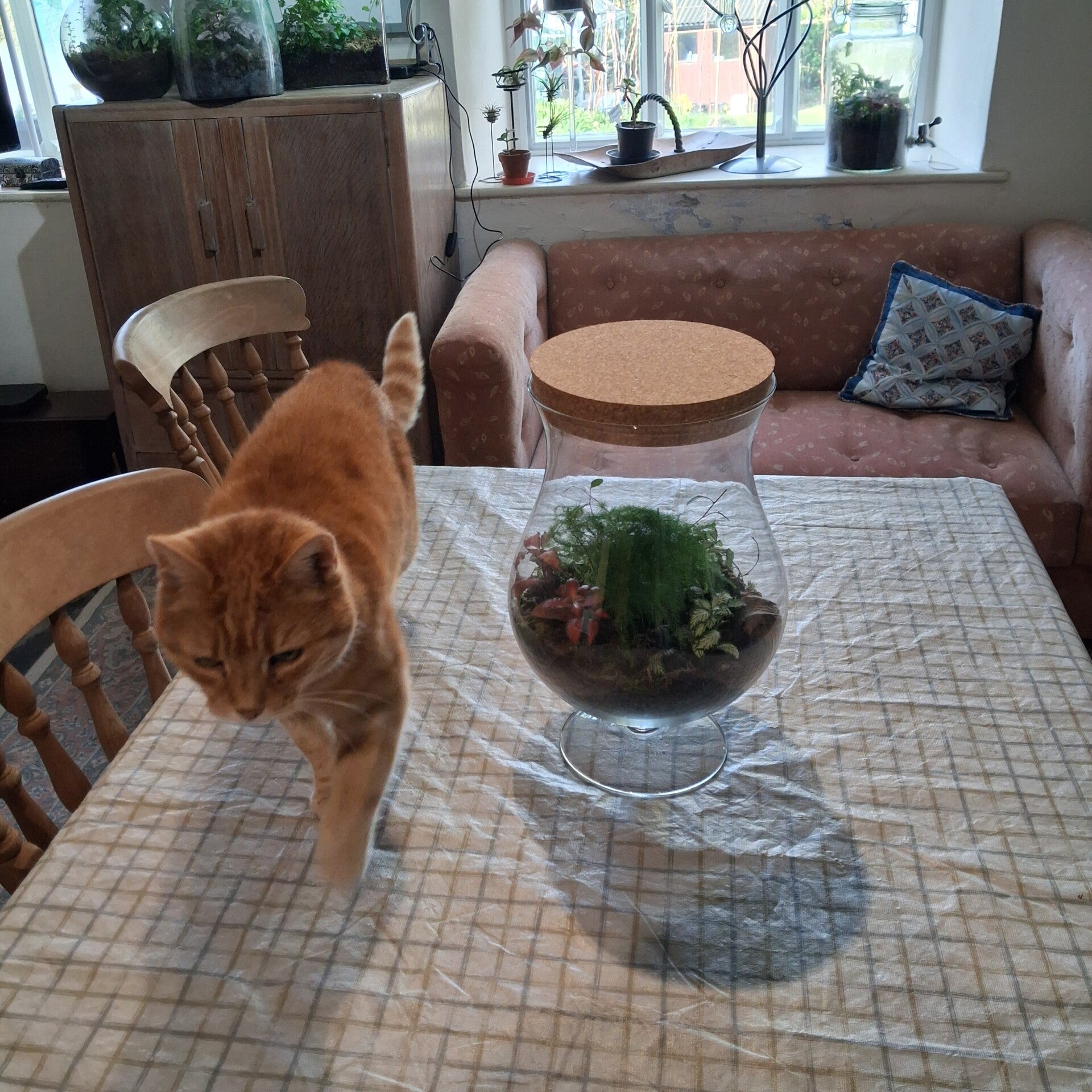
The ginger cat shown to the right is called Toby and has no interest in terrariums or jarrariums. She just got in the way of the camera so I negotiated image rights with her, involving the provision of extra treats such as freshly roasted chicken. Despite the male sounding name she's a girl, but that's a story for another blog post.
Beyond the ordinary
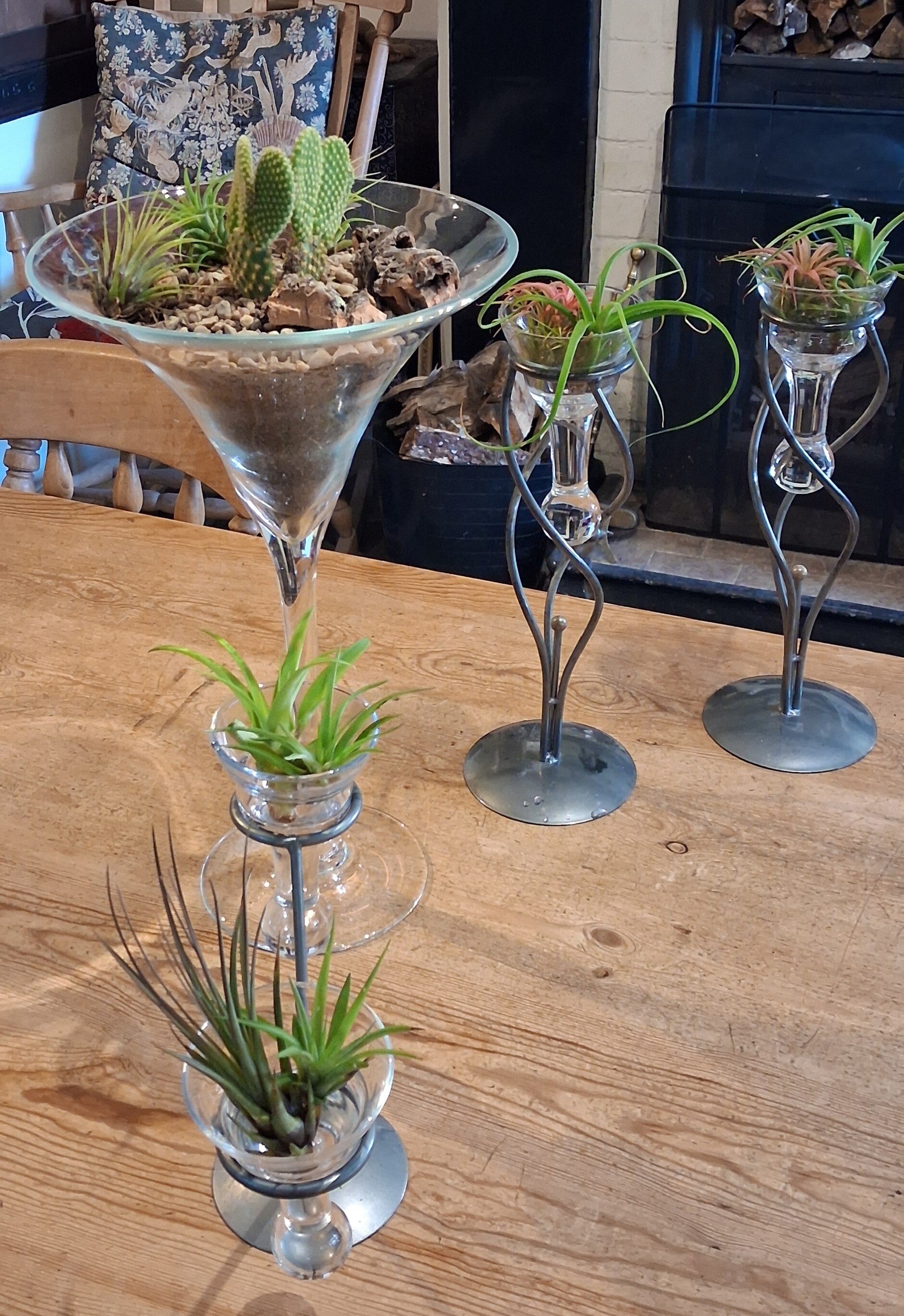
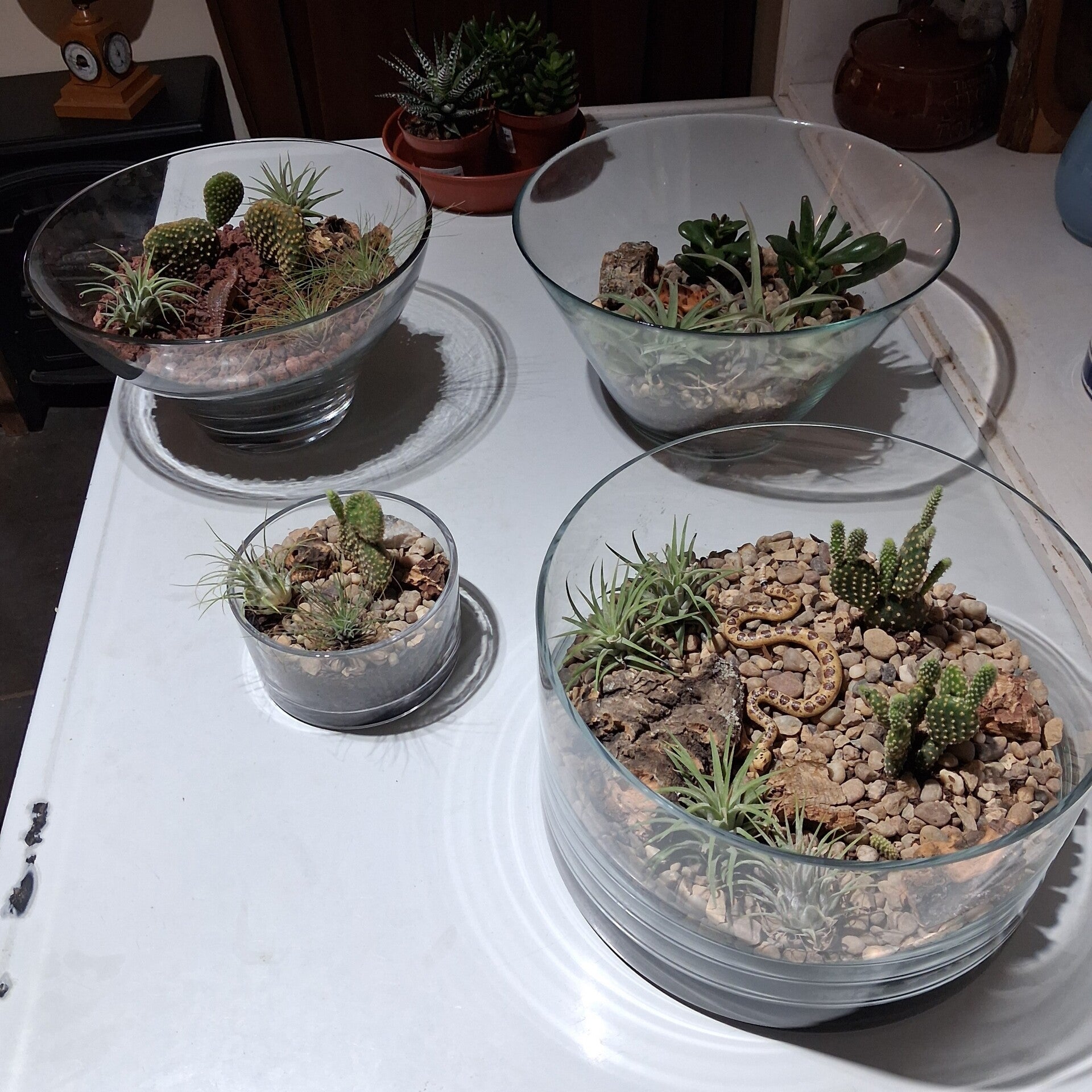
Sasha aims to be innovative and try new things. An example is his open top terrariums and jarrariums, which is a counter intuitive concept as they can't create their own supportive environment like the sealed units. However, the terrarium label is often applied to them as a mini indoor garden in an unsealed glass vessel. Sasha is not convinced of the appropriateness of this label and prefers to call them open topped desert gardens, making them perfect for desert-dwelling plants that dislike lot's of moisture. For these creations he uses cacti, succulent and the hugely interesting air plants. Air plants don't have roots and just hang from or sit on what's available. You need to care for them in a different way.
Care of open topped terrariums
Check the soil moisture every two weeks and if it's a little dry then add just a little rain water. In addition, if air plants are included, despite the fact that you might think an 'air plant' needs no more than air, this is not so and they need water too. The air plants Sasha uses need to be placed green side down in rain water every 2 weeks for just 10 minutes.